
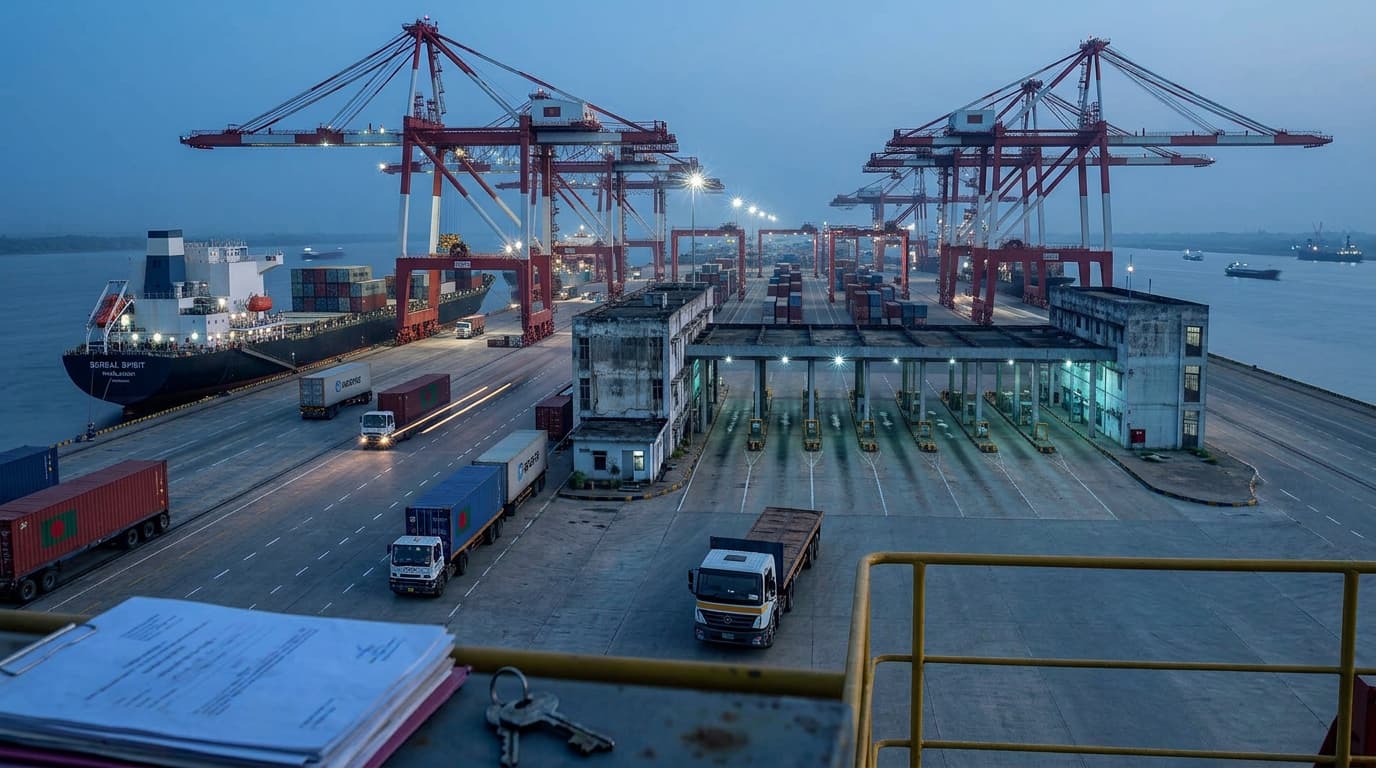
Importing goods into Bangladesh is more than bringing cargo to the port and paying customs duty.
Before your shipment can be released, Customs needs to know what you are importing, how the goods are classified, what duties and taxes apply, and whether any additional documents or approvals are required.
For experienced importers, this may be familiar. For a first-time importer, a missing document, unclear product description or incorrect HS code can quickly turn into unnecessary questions and delays.
The good news? Most of the important preparation can be done before your cargo arrives.
This guide explains the Bangladesh customs clearance process, the documents you may need, how HS codes and duties work, and what you should check before your shipment reaches the port.
Planning an import into Bangladesh? Share your product and shipment details with Laila & Co. C&F Ltd. before your cargo arrives. We can help you understand the documentation and clearance requirements for your shipment.
What Is Customs Clearance in Bangladesh?
Customs clearance is the process of declaring imported goods to Bangladesh Customs, completing the required assessment and compliance procedures, paying applicable duties and taxes, and obtaining clearance for the goods.
For imports, the shipping agent submits the Import General Manifest (IGM). The importer or their nominated C&F agent then prepares and submits the Bill of Entry through the Customs system.
Depending on the shipment, customs clearance may involve:
- Reviewing import documents
- Determining the appropriate HS code
- Customs valuation
- Assessment of duties and taxes
- Product-specific permits or certificates
- Customs examination or verification, where applicable
- Payment of duties, taxes and applicable charges
- Customs and port release formalities
The exact requirements can vary depending on the product, HS code, country of origin, transport mode and applicable regulations.
What Documents Are Required for Import Customs Clearance?
Having the right documents ready is one of the simplest ways to avoid unnecessary problems during clearance.
The exact requirements depend on your product and shipment, but common import documents include:
Commercial Invoice
The commercial invoice contains important information about the transaction, including the product description, quantity and declared value.
Make sure the information is consistent with your other shipment documents.
Packing List
The packing list provides details about the packaging, quantities and packages in the shipment.
Differences between the packing list, invoice and actual cargo can lead to additional verification.
Bill of Lading or Air Waybill
Depending on how your goods are transported, you may need a Bill of Lading, Air Waybill or another applicable transport document.
L/C or Payment Documents
Where applicable, the relevant Letter of Credit and banking/payment documents may be required for the import declaration.
Certificate of Origin
A Certificate of Origin may be required depending on the shipment, applicable regulations or any preferential tariff arrangement being claimed.
Insurance Documents
Applicable insurance documentation may also form part of the import documentation.
VAT/BIN Documentation
Relevant VAT/BIN information is also associated with import clearance.
Product-Specific Documents
This is where requirements can differ significantly between products.
Depending on the goods, you may need additional permits, certificates, testing documents or approvals from relevant authorities.
For example, certain products may involve requirements related to BSTI, DGDA, plant quarantine, health certificates or other regulatory agencies.
So don't just ask: “Do I have all the normal import documents?”
Ask: “Do I have everything required for this product and HS code?”
Bangladesh Customs' Import Export Hub provides product-specific information based on HS codes, including applicable documents and compliance requirements.
Why Is the HS Code So Important?
The HS Code is one of the most important details in an import declaration.
It identifies how your goods are classified for customs purposes and can affect the applicable tariff, taxes and regulatory requirements.
A common mistake is choosing an HS code simply because the product name appears to match.
But Customs classification can depend on factors such as:
- What the product is made of
- What it does
- Its technical characteristics
- How it is used
- Its composition or specifications
For example, describing something simply as “machine parts” may not provide enough information to determine the appropriate classification.
The correct HS code should therefore be reviewed carefully using the applicable Bangladesh Customs tariff and classification information.
Not sure about your HS code?
Don't wait until the shipment reaches the port.
Share your product description, specifications and available invoice or proforma invoice with Laila & Co. We can help you understand the customs considerations before you move forward.
How Are Customs Duties and Taxes Calculated?
There isn't one fixed customs duty rate for all imported goods.
The applicable duties and taxes depend largely on the classification of the goods and the rules applicable to that product.
Depending on the shipment, the assessment may involve:
- Customs Duty (CD)
- Regulatory Duty (RD)
- Supplementary Duty (SD)
- VAT
- Advance Income Tax (AIT)
- Advance Tax (AT)
- Other applicable charges or levies
The Bangladesh Customs Import Export Hub provides HS-code-specific tariff information, including applicable rates and tax incidence.
This is why estimating your import cost before placing an order is important.
Product cost + freight + applicable insurance/value components + customs duties & taxes + port/C&F charges + other applicable costs
A duty calculator can help you plan, but an online estimate should not be treated as the final customs assessment. The final amount can depend on classification, valuation, current tariff provisions, SROs and product-specific requirements.
What Is a Bill of Entry?
The Bill of Entry (B/E) is the import declaration submitted to Bangladesh Customs.
It contains important information about the imported goods, including details relevant to their classification, value and customs assessment.
The importer or nominated C&F agent prepares and submits the declaration through the applicable Customs system, including ASYCUDA World.
Accuracy matters here.
Incorrect product descriptions, quantities, values or classification can create additional questions or affect the assessment process.
This is one of the reasons experienced C&F support can be valuable during import clearance.
Bangladesh Customs Clearance Process: Step by Step
While the exact process varies by shipment, a typical import clearance journey can be understood in these steps:
1. Plan the shipment
Before importing, identify your product, quantity, value, supplier, country of origin, transport method and expected port.
2. Prepare the documents
Collect your invoice, packing list, transport document and any applicable certificates, permits or regulatory approvals.
3. Import manifest submission
The shipping agent submits the Import General Manifest (IGM) to Customs through the applicable system.
4. Bill of Entry submission
The importer or nominated C&F agent prepares and submits the Bill of Entry.
5. Customs assessment and verification
Customs reviews the declaration and determines the applicable duties, taxes and other requirements. Examination or additional verification may apply depending on the shipment and customs procedures.
6. Payment and release
Once the applicable duties, taxes and requirements are completed, the necessary customs and port formalities are finalized and the cargo can proceed toward release.
The important point is that preparation happens before these steps begin.
What Can Cause Customs Clearance Delays?
A customs delay doesn't always start at Customs.
Often, the problem begins with incomplete preparation.
Some common issues include:
Inconsistent documents
For example, the invoice says 1,000 units while the packing list says 950.
Unclear product description
A vague description may make classification and assessment more difficult.
Incorrect HS code
An incorrect classification can affect duty calculation and product-specific compliance.
Missing permits or certificates
Certain products require additional approvals or documentation.
Valuation issues
Incorrect or incomplete information about the value of imported goods can lead to additional scrutiny.
Restricted or regulated goods
Some products are subject to restrictions, conditions or specific regulatory requirements.
Starting too late
One of the easiest problems to avoid is waiting until the cargo arrives before checking what you need.
First-Time Importer? Check These Before Shipping
If this is your first commercial import into Bangladesh, start with the basics.
Before your supplier ships the goods, make sure you know:
- What exactly are you importing?
- What is the product used for?
- What is the quantity and value?
- Where is it coming from?
- How will it arrive in Bangladesh?
- Do you have the commercial or proforma invoice?
- Do you have the packing details?
- Has the HS code been reviewed?
- Does the product require any special permit or certificate?
- Have you estimated your potential duties, taxes and other costs?
- Have you discussed the shipment with your C&F agent?
A short discussion before shipment can save much more time than trying to solve a documentation problem after the cargo arrives.
Importing Through Chattogram Port?
For sea shipments, Chattogram is a major gateway for Bangladesh's import trade.
Depending on your shipment, clearance may involve coordination with:
- Chattogram Port
- Patenga Container Terminal (PCT)
- Relevant off-dock facilities
- Customs documentation and assessment
- Cargo handling
- Release-related formalities
Good preparation becomes especially important when your cargo is moving through a busy port environment.
Having your documents, product information and clearance requirements organized beforehand puts you in a much better position when the shipment arrives.
Why Work With a C&F Agent Before Your Cargo Arrives?
A C&F agent is not simply someone you contact after the ship arrives.
The earlier your C&F agent understands the shipment, the earlier potential documentation, classification and compliance issues can be identified.
Depending on the scope of engagement, a C&F agent can support you with:
- Customs documentation
- Bill of Entry preparation and submission
- HS code and product classification discussions
- Duty and tax guidance
- Customs-related coordination
- Regulatory documentation
- Examination or verification-related processes
- Cargo clearance and release coordination
In short, good C&F support starts with preparation - not just paperwork.
How Laila & Co. C&F Ltd. Can Help
At Laila & Co. C&F Ltd., we help businesses navigate the practical side of importing and customs clearance in Bangladesh.
Our services include:
- Import Customs Clearance
- Export Customs Clearance
- Customs Documentation
- Duty & Tax Guidance
- Cargo Handling & Coordination
- Import Planning & Consultation
Whether you're an experienced importer or preparing your first shipment, our goal is to help you understand what needs to be prepared before your cargo reaches the port.